

Think about the last time you hired someone to work closely with your family: a pediatrician, a coach, a babysitter trusted with the house keys. You likely ran through a mental checklist before handing over that trust. Parents do the same thing when they sit down with a prospective home tutor. Those questions aren’t a formality. They’re a window into what actually makes tutoring work: clear planning, honest progress tracking, real accountability. This post walks through ten questions parents commonly ask, and shows you how to answer each one with evidence of real practice.

What Parents Really Want from a Home Tutor
Before a parent asks about your degree or your years in the classroom, they’re really asking something simpler: will my child feel understood, and will that show up in real progress? Credentials come later. Trust comes first. That’s worth sitting with, because it reframes the whole hiring conversation. The ten questions parents tend to ask sort into three buckets:
- fit (does this tutor connect with my kid)
- method (how do they actually teach)
- accountability (how will we know it’s working)
Underneath every question is one of those three concerns, even when the wording sounds like it’s about scheduling or price. Consider a tutor who walks into an interview ready for “What’s your background?” but gets “Will she still like reading after this?” instead. The one who anticipates that shift, and answers it directly, comes across as a professional who’s thought about this specific kid, not just someone offering extra help after school. That’s also where explanation beats résumé. A tutor who can walk a parent through why they’d start with a diagnostic session, or why they’d adjust pacing for a child who’s anxious about math, builds trust faster than one who lists certifications and hopes it lands. Parents aren’t hiring a transcript. They’re hiring judgment they can see at work.
Judging Qualifications and Subject Fit
A transcript full of A’s in calculus doesn’t tell you whether someone can explain calculus to a kid who’s already decided they hate math. That’s the gap parents need to probe, and it’s the same gap you’d check for if you were hiring a co-teacher.
Matching the tutor to the child
Subject mastery matters less than pedagogical flexibility: the ability to re-explain the same idea three different ways until one of them lands. Ask a candidate how they adapt when their first explanation doesn’t work. A strong answer describes a specific pivot, not a shrug. For example, a tutor might explain fractions with a number line, then switch to slicing a pizza when the abstraction doesn’t click for a concrete learner.
Push past degrees held and ask about actual teaching experience with the child’s age group. A tutor who’s spent years with teenagers may struggle with a fidgety seven-year-old, and the reverse is just as true. It also matters whether the tutor knows the child’s specific curriculum or exam board: a mismatch here means relearning terminology instead of reteaching content.

Checking references and track record
A glowing testimonial quote is easy to write and hard to verify. Ask instead to speak with a previous family directly. In that conversation, listen for specifics rather than vague praise:
- which skills improved
- over what timeframe
- how the tutor knew it was working
The strongest answers include real examples: a student who struggled with reading comprehension in similar ways to your own child, and exactly how their progress unfolded.
How the Tutor Plans and Structures Sessions
When a parent asks about planning, they’re really asking one thing: does this tutor know where the child is headed, or are they just showing up? That’s a fair question, and it’s worth thinking through from your side of the desk, because it separates tutors who teach with intention from those who improvise around whatever homework the child brought that day.
Looking for a real plan
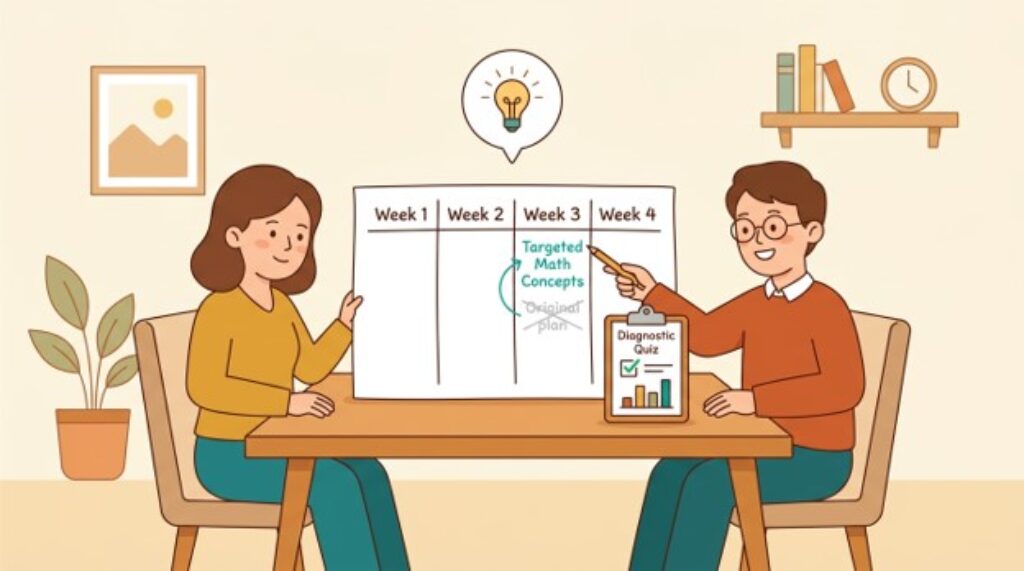
A parent might ask to see a sample outline for the first month of tutoring. If you can produce one, even a rough one, it shows sessions build toward something rather than existing as isolated one-off help. The best answer isn’t a rigid script, though: a plan that adjusts once assessment results come in beats a fixed one every time. For example, if you start a new student with a quick diagnostic, you can walk a parent through exactly why week three looks different from what you first sketched out, and that flexibility is a good sign, not a red flag.
Consistency between sessions
Parents also want to know how you remember what was covered last time. “I just remember” isn’t much of an answer. Written records, whether notes, a shared document, or a formal plan, prevent you from re-teaching a skill the child already has and losing time that could go toward the next one. Teachers who use an online lesson planner can show parents exactly how each session connects to the last, week over week. Reusing and adapting plans across different students, rather than starting from a blank page every time, is its own quiet signal of organized, deliberate teaching.
Tracking Progress and Staying Accountable
One question parents almost always ask, in some form, is how will I know this is working? That’s not a challenge to your competence. It’s a fair ask, and answering it well is what separates a tutor who’s genuinely tracking growth from one who’s just showing up.
Defining what progress looks like
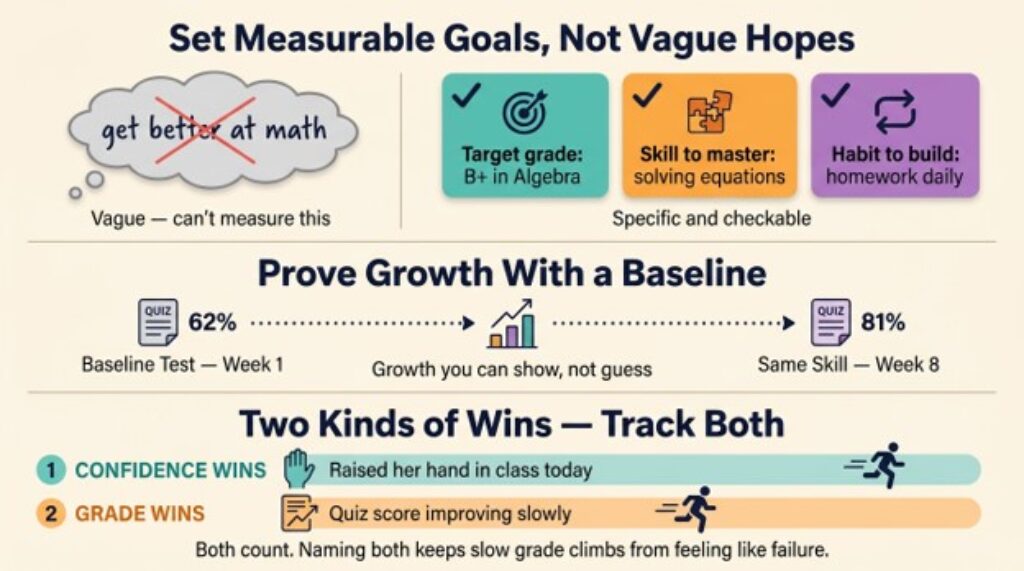
Before the first session ends, set measurable goals with the parent and student:
- a target grade
- a skill to master
- a habit to build
Vague hopes like “get better at math” don’t hold up three weeks in. When a parent asks how you’ll measure improvement, the strongest answer involves a baseline assessment, not a gut feeling. Test where the student starts, then check that same skill again later so growth is visible, not assumed. Also separate two kinds of wins: confidence gains and grade gains. A student who finally raises their hand in class is progressing, even if the next quiz score hasn’t caught up yet. Both matter, and naming both keeps a slow grade climb from feeling like failure.
Keeping parents in the loop
Ask yourself how and how often you’ll report back, and don’t wait for report card season to say anything. A short, regular summary (weekly or biweekly) keeps parents oriented and keeps you honest about what’s actually landing. This is easier when attendance, grades, and notes live in one place instead of scattered across texts and memory. Tools like EMStudio, an all-in-one online teacher planner, let a tutor pull attendance and grades into a single update, turning a fuzzy “they’re doing fine” into a concrete conversation.
Logistics That Quietly Make or Break Tutoring
Qualifications and teaching style get most of the attention in a parent’s checklist, but logistics are what decide whether tutoring actually sticks. A great fit on paper can still fall apart over a missed payment or a session that runs too long for a tired seven-year-old.
Time and money expectations
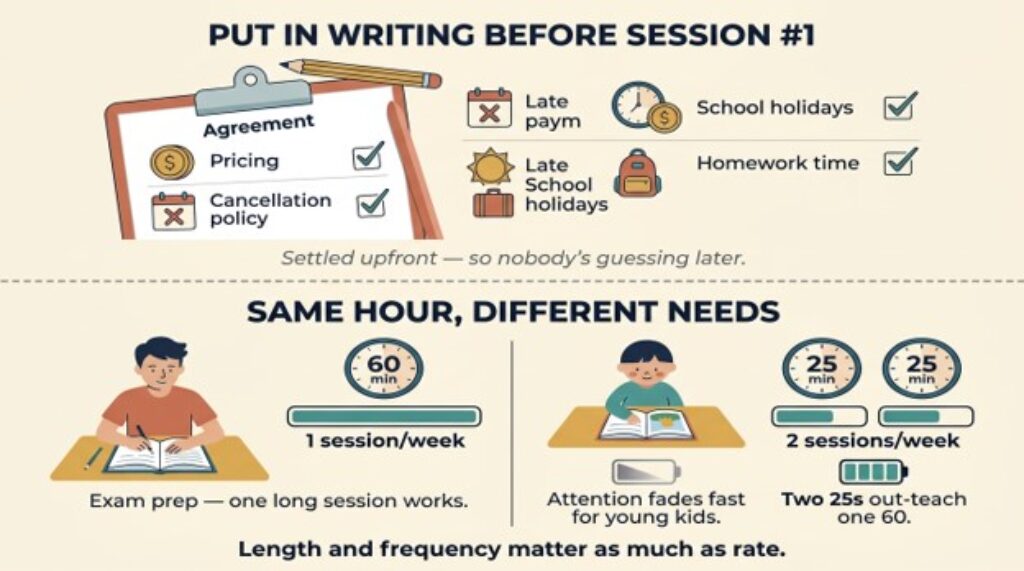
Put pricing, rescheduling, and late-payment rules in writing before the first session, not after a scheduling conflict turns awkward. Parents should know the cancellation policy, how payment works, and what happens over school holidays: all of it settled upfront, so nobody’s guessing later. Session length and frequency matter just as much as the rate. A teenager prepping for exams might do well with one long weekly session, but younger children usually need something different. Consider a first grader working on reading fluency: two focused 25-minute sessions a week will out-teach a single hour-long block, simply because a six-year-old’s attention doesn’t stretch that far. It’s worth asking, too, whether the tutor assigns homework and roughly how much time it will take, since that’s one more thing competing for a child’s evening.
Setting a trial and review point
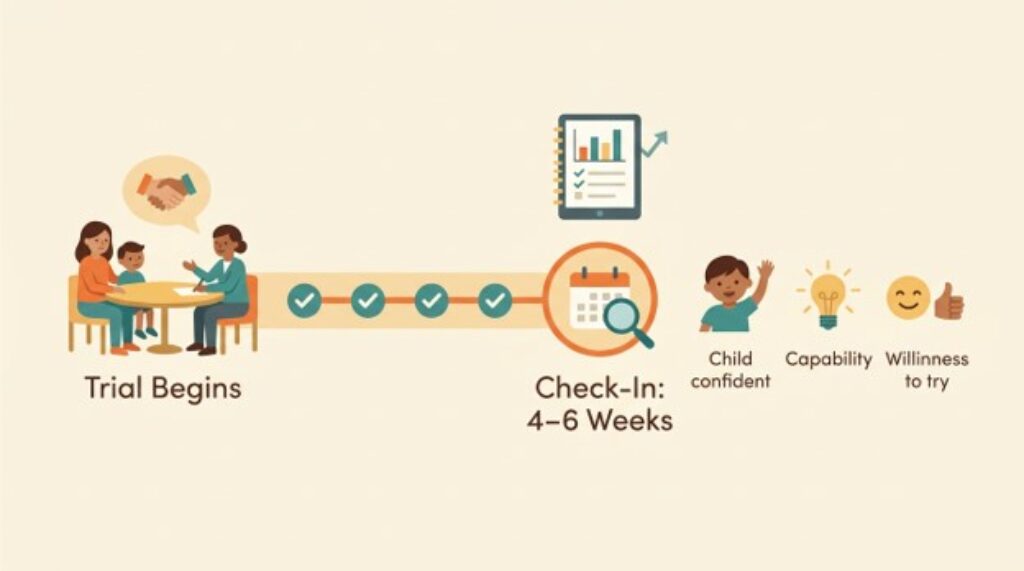
Agree on a trial period from the start: a handful of sessions with a clear exit if the fit isn’t right, no hard feelings either way. A tutor who’s confident in their method will welcome this. It gives them a real chance to show results instead of being judged on a single rough session. From there, schedule an actual check-in four to six weeks in. That’s usually enough time to see whether the child is more comfortable, more capable, and more willing to try. A tutor tracking sessions and homework in a tool like EMStudio can walk into that conversation with real notes instead of a vague impression, which makes the review far more useful for everyone at the table.
Safety, Boundaries, and Working with the School
Parents don’t ask these questions to be difficult. They ask because a tutor spends time alone with their child, and that trust has to be earned before it’s given. Answering well starts with treating safety as a given, not a favor.
Checking safety basics
Expect to verify your identity, share references, and produce any required clearances, and do it without apology. A parent asking for a background check isn’t questioning your character. They’re doing their job. Have this ready before it’s requested: it signals you take the role seriously. Before the first session, agree on where it happens and who else is home. A private space works for some families; others prefer sessions at the kitchen table with a parent nearby. Either is fine, but say so upfront instead of leaving it to guesswork. Boundaries matter beyond the room, too. Talk through how you’ll handle a child who’s tired, resistant, or just having an off day. A tutor who can name a plan (shorten the task, switch to a lighter activity, end early and reschedule) reassures a parent far more than one who promises every session will go smoothly.

Aligning with the classroom
Be willing to contact your student’s classroom teacher, and say so plainly. A quick email confirming which method the class uses for long division saves everyone a headache later. Some tutors log these notes in an app like EMStudio so parents and teachers can see what’s been covered without another phone call. Your goal is to complement school work, not run a second curriculum beside it. A tutor who reinforces the classroom’s methods keeps the child from juggling two different ways to solve the same problem, and that consistency is often what makes the tutoring actually stick.
Turning the Ten Questions into a Confident Choice
Ten questions can feel like a lot to hold onto, so it helps to know which answers actually matter. Not every response carries the same weight, and a parent (or a teacher advising one) needs a way to sort the strong signals from the smooth talk. Start by ranking answers on fit, method, and accountability, not charisma. A tutor who lights up a room in the interview but can’t describe how they’d track progress isn’t the safer bet. The one who lays out a plan for assessing gaps, adjusting pace, and reporting back wins on substance every time. The best tutor isn’t the most polished one. It’s the one whose answers reveal a repeatable system: the same clear process they’d use with any student, not a one-off performance for the interview. That consistency is what turns a good first impression into steady progress over months.
Don’t treat the ten questions as a one-time filter, either. Bring them back at the trial review, a few sessions in, and check whether the early promises held up in practice. Did the tutor actually assess before jumping into content? Is the communication as regular as they said it would be?

Finally, trust what you see in the child. After two or three sessions, a student’s body language, questions, and willingness to try again say more than any interview answer ever could. Every one of these questions boils down to the same thing: parents want proof their child’s time is well spent. When you can show your planning, your progress notes, your steady communication, you’re not just answering a question. You’re demonstrating the practice behind it. That’s the real work of tutoring: turning trust into results, one session at a time. Answer these ten questions well, and you won’t just win the interview. You’ll have already started earning the outcome every parent hired you for.